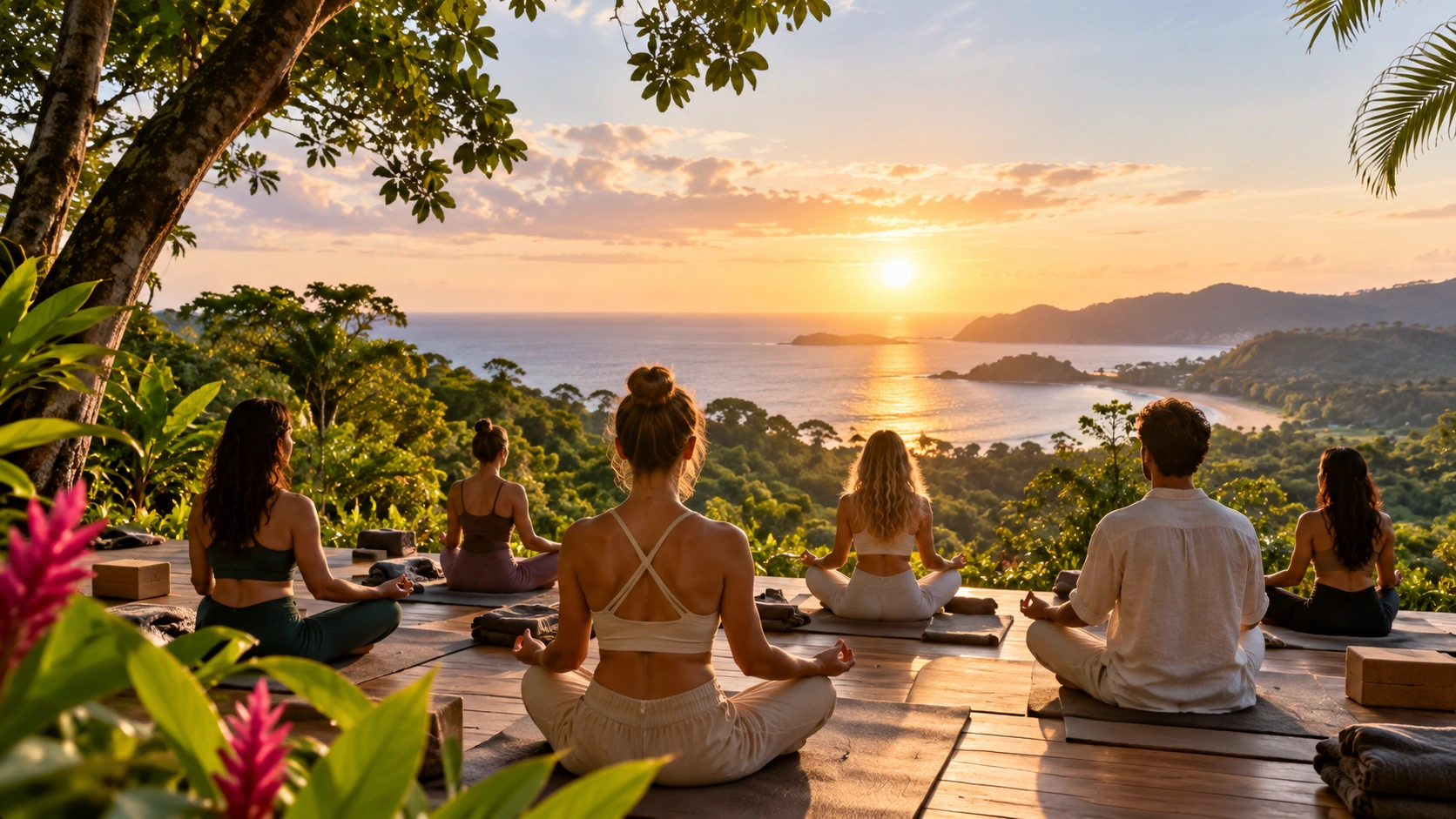
Choosing the right yoga retreat in Costa Rica is about more than booking a beautiful setting and a convenient week off. The best retreat aligns with your personal stage—physically, emotionally, and spiritually—so you return renewed, grounded, and ready to integrate what you learned.
Costa Rica offers everything from beach and jungle retreats to restorative escapes and more immersive transformational experiences. With so many options available, knowing what to compare before booking can help you find the experience that truly fits your needs.
This practical guide will help you understand what to look for when choosing a yoga retreat in Costa Rica and make a more confident decision.
Key Things to Look for Before You Book a Yoga Retreat in Costa Rica
Location and Environment
The environment surrounding your retreat can have a significant impact on your experience.
- Tropical setting, mountains, jungle, or beach: Do you need ocean air and waves to relax, or do you prefer the quiet of the jungle and birdsong for inward practice?
- Accessibility and travel time: Longer transfers can deepen the feeling of getting away, but consider whether you want a lengthy transfer after a long flight.
- Climate and season: Costa Rica’s dry and rainy seasons can affect activities such as surfing, island hopping, hiking, and outdoor yoga classes. Check the typical conditions for your travel dates.
- Nearby culture and excursions: If cultural immersion, surf lessons, island hopping, or nature tours matter to you, consider a retreat with convenient access to those experiences.
Teacher Experience and Credentials
Your teacher is one of the most important elements of a yoga retreat. The setting may be beautiful, but the quality and style of the teaching will shape much of your experience.
- Senior teachers vs. newer instructors: Experienced teachers can bring refined sequencing, trauma-aware language, and the ability to guide a group through deeper processes.
- Lineage, training, and specialties: Look for teachers trained in areas you value, such as alignment-based Vinyasa, restorative yoga, mindfulness, Ayurveda, or trauma-informed yoga.
- Teaching style and sample classes: Watch videos or ask whether sample or trial classes are available. The teacher’s voice, philosophy, and approach should resonate with you.
Group Size and Group Dynamics
Think about how much personal attention and social interaction you want during your retreat.
- Small groups (6–12 people): More personal attention, deeper connection, and greater opportunity for individual feedback.
- Medium to large groups (12–30+ people): More social energy and opportunities to meet different people, but generally less individualized guidance.
- Target audience and participant mix: Some retreats welcome all levels, while others are designed for advanced practitioners or yoga teacher training graduates. Make sure the group matches your experience and intentions.
Retreat Style and Intention
Not every yoga retreat has the same purpose. Before booking, be clear about what you want from the experience.
- Restorative and healing vs. active and adventurous: Decide whether you need gentle recovery or prefer vigorous practice combined with outdoor activities.
- Spiritual vs. secular: Some retreats incorporate meditation, mantra, and ritual, while others emphasize physical practice and general wellness.
- Depth of work: A weekend “reset” retreat can be very different from an immersive transformational retreat that incorporates integrative practices, workshops, and follow-up support.
Activities, Schedule, and Daily Rhythm
A good retreat schedule should support the purpose of the experience rather than simply fill every hour of the day.
- Daily schedule transparency: Look for a sample itinerary. Does it provide enough free time to rest, reflect, and integrate?
- Complementary activities: Surfing, hiking, cacao ceremonies, breathwork, or spa treatments can enrich the experience, but consider whether they support your goals or distract from them.
- Integration workshops and support: Journaling, group sharing, and practical tools for post-retreat life can help deepen the experience and make it easier to carry what you learn back into daily life.
Accommodation and Amenities
Where and how you sleep matters, especially during a retreat focused on rest, healing, or deeper personal work.
- Room types and privacy: Shared rooms can be economical and social, while private rooms offer greater solitude and opportunities for deeper rest.
- Facilities: Consider the yoga shala, outdoor practice spaces, pool, healthy food options, and Wi-Fi policies, especially if you are looking for either a digital detox or the ability to stay connected.
- Food and dietary needs: Confirm whether vegetarian or vegan meals are available, whether allergies can be accommodated, and whether the retreat uses local or organic ingredients if these are important to you.
Emotional and Psychological Safety
If a retreat involves emotional exploration or transformational work, feeling safe and supported is especially important.
- Trauma-informed practices: Teachers who use invitational language, offer options, and provide thoughtful cueing can create safer spaces for vulnerable work.
- Confidentiality and boundaries: Look for clear expectations around group sharing, physical adjustments, and one-on-one teacher availability.
- Preparation and aftercare: Ask whether the retreat provides guidance before you arrive and resources or integration support after you return home.
Cost, Value, and Cancellation Policies
Price alone does not tell you whether one retreat offers better value than another. Compare what is actually included.
- What’s included: Meals, yoga classes, excursions, and transfers can substantially change the overall value.
- Additional costs: Excursions, massages, airport transfers, tips, and other activities may not be included. Ask for a clear breakdown before booking.
- Cancellation and refund terms: Understand the retreat’s policies in case flights, health, or other circumstances require you to change your plans.
How to Compare Yoga Retreats Before Making Your Decision
Match the Retreat to Your Stage, Not Just Your Calendar
A beginner looking for structure and safety may benefit from a retreat designed around foundations. An experienced practitioner seeking greater depth may prefer a longer, teacher-led immersion.
Prioritize retreats that clearly explain who they are designed for rather than choosing solely because the dates fit your travel schedule.
Intensive vs. Gentle
Consider your physical and emotional state before choosing the intensity of the retreat.
If you are burned out or depleted, a restorative, slower-paced retreat may serve you better than a high-energy program—even if both take place in equally beautiful locations.
Teacher-Led vs. Self-Guided Retreats
Teacher-led retreats provide curated practices, personalized guidance, and facilitated integration. Self-guided or teacher-assisted retreats offer greater autonomy but typically provide less structured support.
Consider how much guidance you want before deciding which approach is right for you.
Short-Term Escape vs. Transformational Retreat
There is a difference between getting away from daily life and intentionally working toward lasting change.
If your goal is deeper transformation, look for retreats that incorporate workshops, reflection, journaling, integration, and practices you can continue at home—not simply daily yoga classes in a beautiful destination.
How Devaya Yoga™ Approaches Transformational Yoga Retreats in Costa Rica
For those seeking a deeper, holistic experience, Devaya Yoga™ retreats are designed as transformational containers that integrate movement, breath, color vibrations, sound frequencies, emotional safety, and practical tools for everyday life.
Our retreats emphasize small groups, experienced teachers trained in trauma-informed and integrative methods, nourishing local cuisine, and intentional schedules that balance practice, reflection, rest, and connection with nature.
Rather than simply matching a retreat to a convenient travel window, we encourage participants to consider where they are on their personal path and choose an experience that supports that stage.
We also offer pre- and post-retreat support. A transformational retreat can be a meaningful experience that requires courage, preparation, and integration. We are here to support you along the way.
Practical Checklist Before Booking Your Costa Rica Yoga Retreat
Before making your reservation:
- Read the teacher’s biography, credentials, and areas of specialization.
- Watch a sample class or teaching video when available.
- Request a sample daily schedule and photos of the accommodations.
- Ask about group size and the type of participants the retreat is designed for.
- Confirm dietary accommodations and meal arrangements.
- Review cancellation, refund, and transfer policies.
- Ask exactly which activities, excursions, and transfers are included in the price.
- Find out whether the retreat provides preparation before arrival.
- Check whether integration support is available after you return home.
The right yoga retreat in Costa Rica should offer more than an attractive destination. It should provide an environment, teaching approach, pace, and level of support that align with what you need at this point in your life.
Take the time to compare your options carefully. When the retreat’s intention aligns with your own, the experience can become much more than a vacation—it can provide space to reconnect, reflect, and return home with practices and insights you can continue to use in everyday life.